Massive Black Holes Grow Differently, Study Finds
Turns out supermassive black holes aren't born from single stars. They're built through cosmic pile-ups.

Rethinking Black Hole Formation
So, about those monster black holes? New research out of Cardiff University is flipping the script on how they're born. Turns out, the biggest ones in the universe don't just pop into existence from a single star's collapse. That's what we used to think, anyway. Nope. They're actually built, piece by piece, through a whole lot of collisions inside crowded star clusters. The team, led by Fabio Antonini, pulled data from 153 black hole mergers. Observatories like LIGO in the US and Virgo in Italy caught those events. We're talking about the Gravitational-Wave Transient Catalog, version 4.0 — the biggest collection of its kind.
The Role of Star Clusters
Here's the kicker: The study spotted a critical mass threshold. Forty-five solar masses. Any star bigger than that? It explodes, violently. Leaves nothing behind to collapse into a black hole. This 'pair-instability mass gap' means supermassive black holes shouldn't, by rights, form from one star. But we have found black holes in that mass range. So, what's going on? A different formation mechanism, clearly. What are we seeing? These supermassive black holes spin fast, chaotic. That's a tell-tale sign of repeated cosmic fender-benders, all happening in those super-dense star clusters.
Top-rated science books and tools to keep learning.
Implications for Astrophysics
These findings aren't just a new take on black holes. They're also poking holes in our current star cluster models. Big ones. Computational models? They've gotta start factoring in constant, extreme collisions across cosmic time. And it's not just about astrophysics. This research actually gives us hints about nuclear processes, too. You know, inside massive stars, carbon turns into oxygen during helium burning. That exact carbon-to-oxygen ratio? It sets the star's explosive mass limit. Now that we've nailed down that mass gap at 45 solar masses, we can get a much clearer picture of how fast those nuclear reactions are really happening.
Context: European Contributions
And hey, let's not forget Europe's role here. This discovery really highlights how much Europe contributes to astrophysics. The Virgo observatory in Italy? It's been crucial, picking up gravitational waves that keep shaking up what we thought we knew. Europe keeps investing in these observatories. That's how we keep pushing the limits of cosmic understanding.
What This Means for You
So, what's this mean for you, the astronomy buffs out there? It means keeping an eye on gravitational wave observations is more important than ever. As these observatories get even better at collecting data, you'll hear more. Expect updates on black holes, star clusters. And yes, get ready for some potential rewrites to those astronomy textbooks.
What's Still Unclear
Still, plenty of questions. Can our current models just be tweaked to fit this new info, or do they need a total redo? How often are these collisions actually happening? And what else out there in the cosmos might they be messing with?
Why This Matters
This isn't just a tweak; it's a total rewrite for how black holes form. Repeated cosmic pile-ups, not just one big star collapsing, create the universe's biggest black holes. The more we get our heads around these cosmic giants, the more we learn about star clusters, about the very forces shaping our universe. Pretty big deal, right?
One short email. The most important Science news, fact-checked, no fluff. Free, unsubscribe anytime.
More from Science

Dubai Solar Parks Could Boost Rainfall by 10%, Study Suggests
A Stuttgart-led project aims to increase rainfall in UAE deserts using solar parks, potentially boosting annual precipitation by 10%.
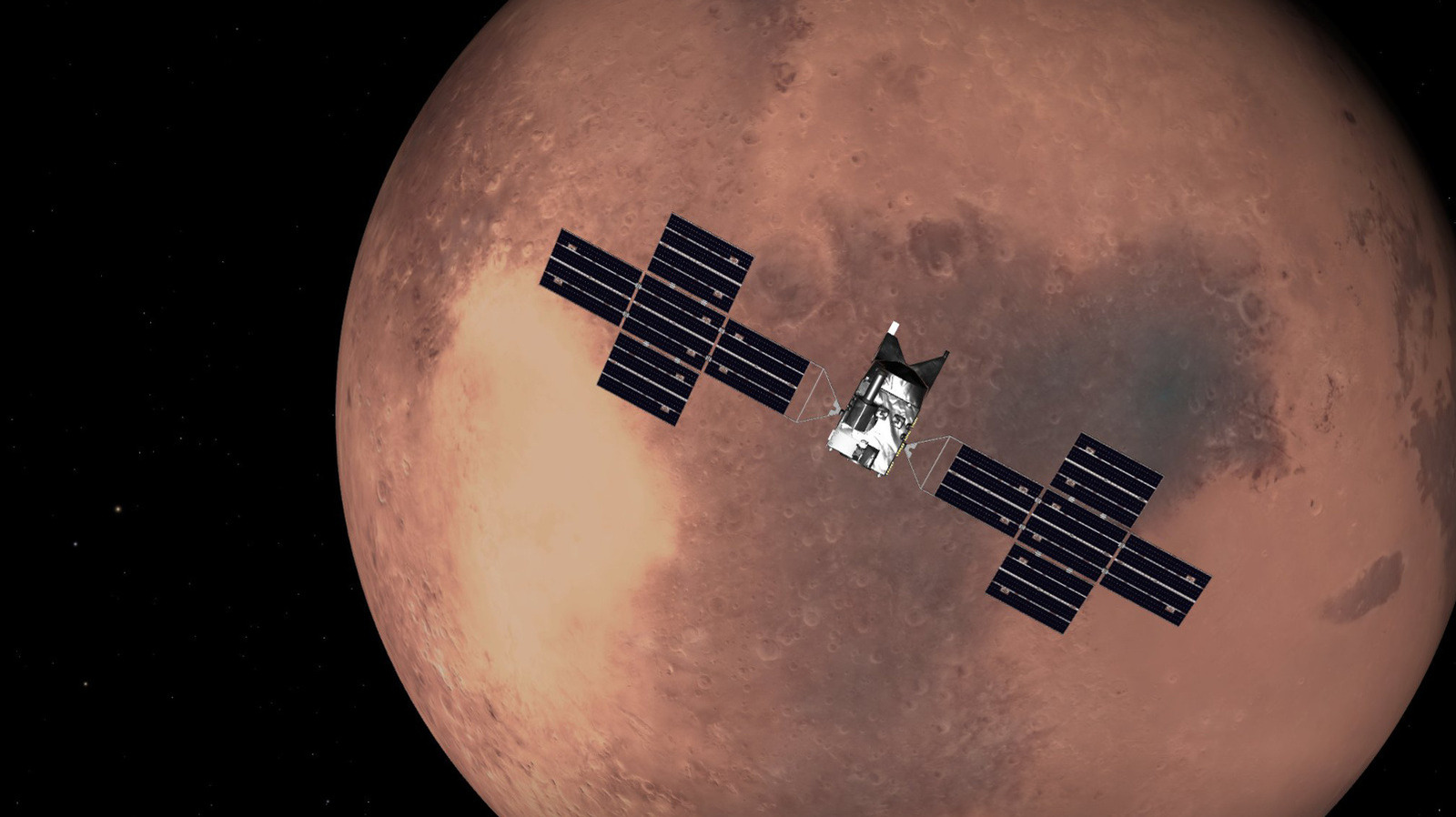
NASA's Psyche Gets a Gravity Kick from Mars
NASA's Psyche spacecraft just used Mars' gravity for a serious speed kick, sharpening its aim toward the metallic asteroid 16 Psyche. Scientists hope it'll spill secrets about how planet cores form.

Starry Nights & City Lights: Heise's Best Photos of the Week
Heise's weekly photo selection is in. Expect stunning urban shots, nature's quiet beauty, and a truly cosmic wonder.

Power Bills Jump 76%: Data Centers Blamed for Grid Strain
Power prices on the PJM grid are up 76%, and an independent monitor points the finger squarely at data centers. The US grid is clearly struggling with our AI-driven electricity needs.
Don’t miss these
Claude Mythos AI Leaks 160 Vulnerabilities in Security Test
Anthropic's Claude Mythos Preview AI just detected 160 vulnerabilities, blowing past competitors in security tests.

Mob Psycho 100: 10 Years of Defying Shonen Tropes
Mob Psycho 100 marks its 10th anniversary, standing out with a blend of humor, empathy, and subversive storytelling that defies typical shonen norms.

Meta Ray-Ban Glasses Get AI Handwriting – Finally
Meta's Ray-Ban smartglasses just got a big update: AI handwriting recognition and display recording. Plus, expanded navigation for major cities. But don't get too excited, Europe.

Deutsche Bahn Aims for Profitability by 2026 with Cost Cuts
Deutsche Bahn plans to break even by 2026 through efficiency measures, following significant financial losses.

New Godfather Novel 'Connie' by Adriana Trigiani Set for 2027 Release
A new 'Godfather' novel. All about Connie Corleone. Adriana Trigiani's writing it, out 2027.
Windows 'MiniPlasma' Exploit: SYSTEM Access, Proof-of-Concept Public
Meet 'MiniPlasma,' a new Windows zero-day exploit that gives attackers SYSTEM privileges. Microsoft hasn't said a peep about it.