Ancient Galaxy 'Loki' Discovered at Milky Way's Core
Astronomers uncover remnants of a dwarf galaxy at the center of our galaxy using machine learning.
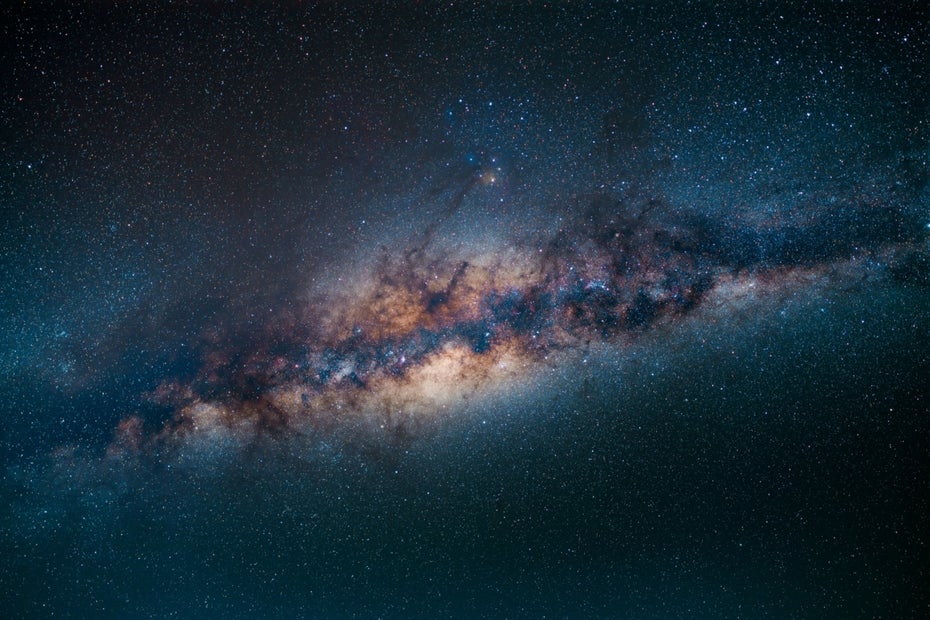
Discovering Loki: A Galactic Archaeological Find
Astronomers, led by Federico Sestito from the University of Victoria, Canada, have made a big find in the heart of the Milky Way. They've identified remnants of an ancient dwarf galaxy, 'Loki', absorbed into our galaxy long ago. Details of this discovery feature in the Monthly Notices of the Royal Astronomical Society.
The team spotted these remnants by analyzing 20 metal-poor stars with odd movement patterns in the Milky Way’s disk. Usually, such ancient relics turn up at the galactic halo's edges, making this find pretty intriguing.
Machine Learning's Role in Astronomy
'Loki' was unearthed using machine learning algorithms and data from the European Space Agency's Gaia mission. These tools helped the researchers cluster chemical signatures and movement patterns.
Machine learning, especially the t-SNE algorithm, was key in pinpointing these standout stars. This algorithm simplifies complex data, transforming numerous chemical variables into an easy-to-read map.
Chemical Signatures and Galactic History
The stars lacked remnants from high-energy white dwarf explosions, hinting at the system's age. This absence suggests 'Loki' joined the Milky Way early on, before white dwarfs formed.
This insight illuminates our galaxy’s dynamic and chaotic early stages, piecing together its ancient past.
Unusual Stellar Movements
'Loki' stars show diverse movements. Eleven align with the Milky Way's rotation, while nine move in a retrograde orbit. This mixed motion signals a lack of stable disk rotation during our galaxy's early chaos.
Gravitational clashes from colliding systems scattered these stars, preserving their unique paths today.
The Value of Gaia Data
The Gaia mission by ESA has been crucial in mapping the Milky Way with unmatched precision. Its data helps astronomers study star positions, distances, and motions, offering insights into our galaxy's structure and evolution.
What's Still Unclear:
- How statistically reliable the findings are with just 20 stars.
- Whether 'Loki' was a separate system or part of a larger event.
- How future findings might reshape our view of galactic evolution.
Why This Matters:
This discovery deepens our understanding of the Milky Way's history and underscores machine learning's power in astronomy. As tech progresses, we're set for more finds that redefine our universe knowledge.
Combining machine learning with astronomical data is a powerful tool for unlocking cosmic secrets, giving insight into our galactic neighborhood's formation processes.
More from Science

How Small Changes Disrupt Your Multitasking Ability
Even top multitaskers can stumble over small tweaks, says a Martin Luther University study.

US Releases UFO Files: A Political Distraction or Transparency?
The US declassified UFO files, raising eyebrows over potential diversion amid political turmoil.

The Surprising Mood and Gut Health Benefits of Coffee
Research links coffee to mood and gut benefits, even in decaf drinkers, offering a new angle on this everyday beverage.

Advancements in Quantum Dots: Boosting Qubit Flexibility
Quantum dot tech may soon blend mass production with atomic level flexibility.